November 21, 2025
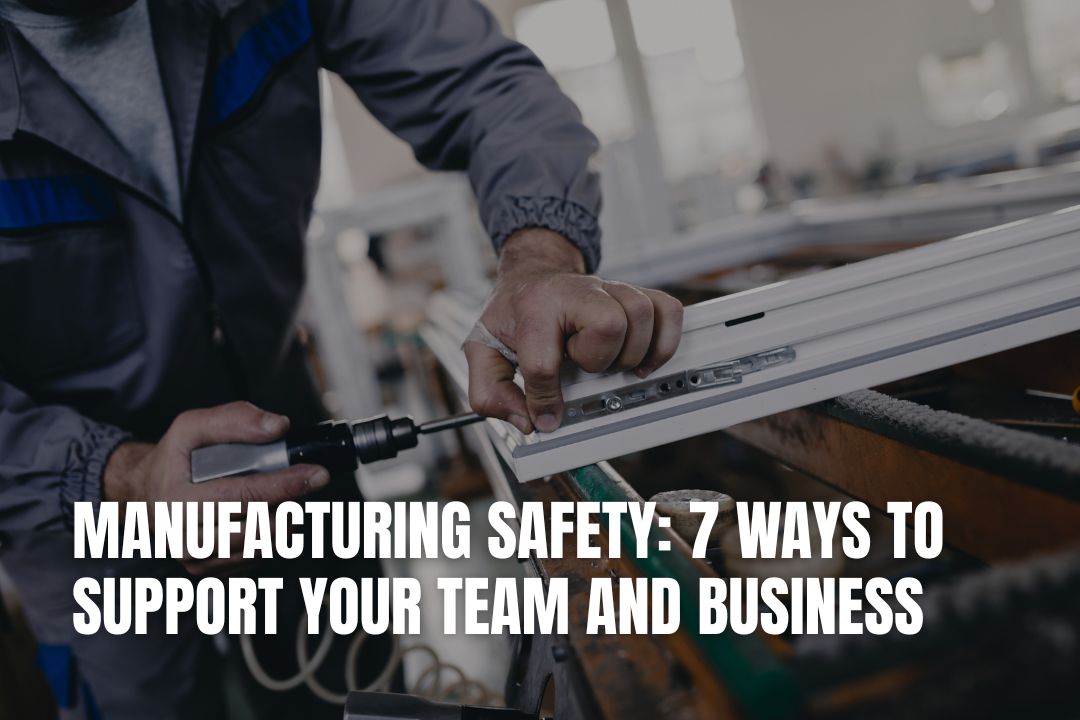
There are moral reasons for manufacturing facilities to invest in sufficient safety measures, but it’s also true that a safe and healthy environment offers a significant range of other advantages.
While the goal is to primarily keep employees safe while at work, ensuring your manufacturing facility is safe can also lead to an improvement in your employee retention rate, boost productivity, and lead to reputational enhancements. Add in the fact that it can reduce employee sick days and that many safety-enhancing strategies also have a positive impact on a company’s bottom line, and it becomes all too obvious that facility safety should be a top priority, not an afterthought, for all ambitious manufacturing companies.
The question is, how do you enhance safety in a way that offers benefits to your team and business? We’ll answer that question in this article by taking a look at nine effective strategies for moving your site’s safety in the right direction.


You can’t know how to make a facility safer until you know what the dangers are. All facilities share common dangers, but they also have their own unique threats. Assessing your facility’s safety risks is a key starting point for putting together a strategy for creating a safer environment.
Note that this task doesn’t necessarily have to be performed in-house, and perhaps shouldn’t be if there are no safety experts on the team. Outsourcing the task to a safety audit company can offer a comprehensive overview of your site’s safety issues. Once you have the report, you’ll need to work through the safety risks in order of priority.
Manufacturing facilities are safer when all stakeholders contribute to site safety. For that to happen, manufacturing companies must get buy-in from all employees. This process goes beyond simply providing training to team members (though that is important) and instead empowers employees to take responsibility for both their safety and the safety of their colleagues. Encouraging open communication, around safety and everything else, can create an environment in which workers feel comfortable speaking up about any safety concerns they might have. Offering rewards, either financial or through awards, for workers who exemplify outstanding safety practices can also be an effective strategy.
Because faulty/damaged/poorly maintained machinery increases the risk of employee injuries, taking a proactive approach to equipment inspection and maintenance is key to maintaining a safe working environment. There are business benefits to doing this, too, such as decreased downtime and fewer repair-related expenses.
Inspection and maintenance can involve a wide range of strategies. Routine visual inspections, performed either by supervisors or employees, can help identify wear-and-tear and loose components early on. For issues that are more difficult to identify, such as gas leaks or pressure loss, specialist equipment can help speed up diagnosis. For example, you can use Distran Ultra Pro to detect leaks and real-time monitoring systems can monitor pressure changes, helping to quickly identify issues without having to shut down the entire system. It’s also imperative to adhere to each piece of equipment’s maintenance schedule as set out by the manufacturer, it’s an important tool in keeping machinery working exactly as it should.
Employee comfort is about more than ensuring they’re happy in their role (though it is a contributing factor). It’s also about their safety. Employees who work in uncomfortable positions are more likely to suffer a repetitive strain injury, more likely to feel fatigued, and more likely to make an error that results in an injury.
Working to provide more comfortable workspaces for your employees can, therefore, be considered a vital safety improvement. How you improve the comfort levels of a workstation will depend on the starting point and the employee’s specific needs, but may include providing additional seating support, repositioning tools for easier reach, and installing more effective lighting.
The importance of upgrading personal protective equipment (PPE) is easily overlooked. It’s also not always welcome. With manufacturing profit margins increasingly slim, upgrading PPE when the existing PPE is still usable can be hard to justify.
But there is value in doing so, especially if the equipment is beginning to show signs of wear and tear or safety standards have changed. By investing in new PPE, you’ll be giving your employees one of the most effective tools against injury, reducing injury rates while also improving comfort. It also sends a clear message to workers that management takes safety seriously, helping to establish a culture of safety that can impact employee actions and sentiment.
Most safety threats are visible, but there are also non-visible, environmental threats. Excessive noise and poor air quality can have short-term and long-term implications. Exposure to loud noises can damage workers' ears and make it difficult to focus. Poor air quality can cause respiratory issues, dizziness, and fatigue, as well as damage machinery.
Taking proactive steps to combat both is key to keeping workers and the wider environment safe from damage. Providing hearing protection is the obvious solution, but it’s also recommended to install noise-absorbing materials and encase loud machinery to dampen the noise. To improve air quality, installing (or upgrading) an air ventilation system and using dust extraction equipment can help. Air quality monitors with sensors and alarms can always be useful for alerting employees when air quality is unsafe.
Ultimately, manufacturing facilities, in fact, all workspaces, are safer when they’re taken seriously by management. While the tips listed in this blog post will go a long way towards helping to make a manufacturing facility safer, what arguably matters more is ensuring that safety continues to be a top priority for the company’s decision-makers. Safety practices and principles are continually evolving in the manufacturing sector, and by making it a priority, you’ll be ensuring that safety standards and practices will continue to evolve.
With the tips above, manufacturing facilities can help provide a safe and comfortable environment for their employees, ensuring that they’re able to work to their highest capacity, and that’s ultimately good for business.
Beyond the primary goal of protecting your team, a strong safety record can significantly improve employee retention, increase productivity, and build a positive reputation for your company. It's a key part of running a successful and responsible operation.
You can, but if your team lacks a dedicated safety expert, it is often more effective to hire a professional safety audit company. They can provide a comprehensive, unbiased report on your facility’s unique risks, giving you a clear path for improvements.
Create an environment where open communication is encouraged, allowing workers to feel comfortable reporting potential hazards. You can also empower them by making them responsible for their own safety and that of their colleagues. Some businesses find that offering rewards for excellent safety practices helps build a positive culture.
Yes, it is a good idea. Newer PPE often offers better protection and comfort, which can reduce injury rates. Upgrading your team's equipment also sends a powerful message that you are committed to their safety, which helps reinforce a positive safety culture.
Don't forget about environmental factors. Dangers like excessive noise can cause long-term hearing damage, while poor air quality from dust or fumes can lead to respiratory problems and fatigue. Address these with proper hearing protection, ventilation systems, and air quality monitoring.
The Entrepreneurs Guide to Launching a Fast, Lean and Profitable Online Venture.
This is where the magic happens.