July 29, 2026
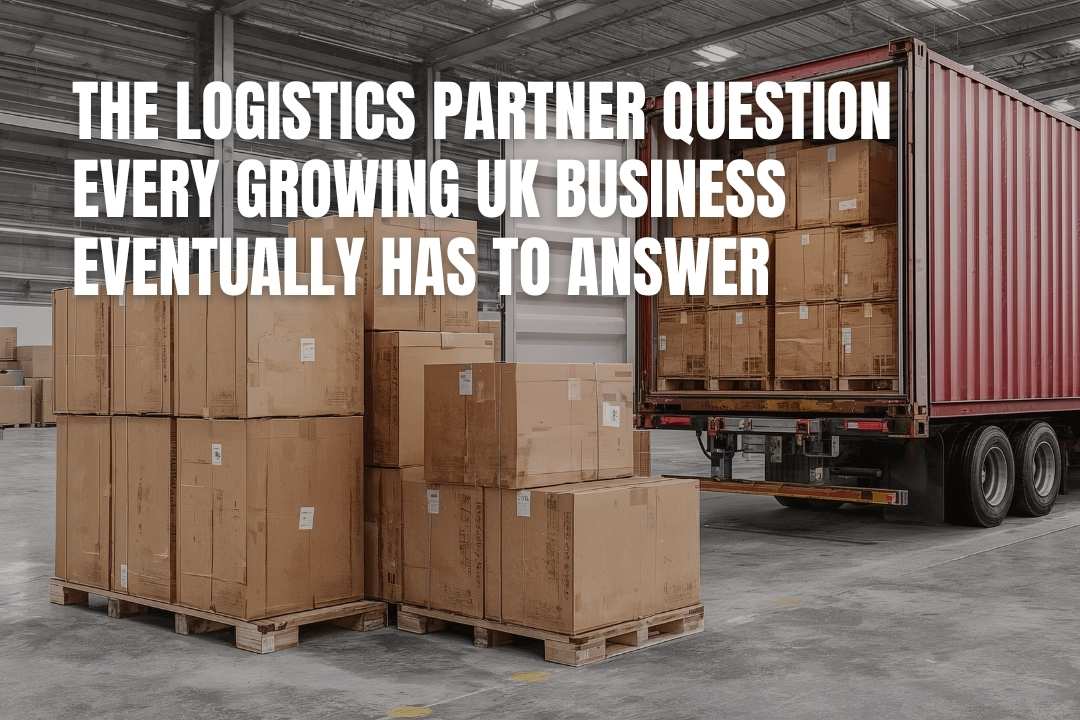
There comes a point in most product-based businesses where the improvised approach to shipping stops working. The parcels going out via whatever courier is cheapest that week. The stock sitting in a spare room or a rented unit with no clear system. The frantic phone calls when something goes missing. It is fine when you are small. It becomes a problem when you are not.
At some point, you need a logistics partner. Not just a carrier. A company that can handle your freight, your storage, your pallet deliveries, and the occasional complicated shipment, without you having to manage five different relationships or chase updates from three different tracking portals.
For many UK businesses reaching that inflection point, International Forwarding Ltd is the kind of operation worth knowing about. They are a Birmingham-based freight forwarder and haulage company with over 35 years in the industry, covering UK road freight, European pallet delivery, warehouse storage and customs clearance from a single base at the heart of the UK motorway network.
When you are small, logistics is a cost you minimise. When you are growing, it becomes an operational dependency. The difference matters.
A business turning over £50,000 a year might ship twenty parcels a week and can absorb the occasional late delivery or damaged item without much consequence. A business turning over £500,000 a year is shipping considerably more, to more customers, across more destinations, and the tolerance for failure drops considerably. A missed delivery to a key retail account is not just a customer service issue. It is a relationship risk.
This shift happens faster than most founders expect. The logistics arrangements that were fine at the start become a source of stress before you have had time to think about replacing them. Building a relationship with a capable freight partner before you genuinely need one is considerably less painful than finding one in a hurry after something has gone wrong.
The term freight forwarder covers a wider range of services than people often realise. It is not simply about moving pallets from A to B, though that is a core part of it.
A full-service operation handles UK road freight for domestic deliveries, whether that is a single pallet to a stockist in Manchester or a full trailer load to a distribution centre. It handles European freight through its own fleet and partner networks, covering major markets including France, Germany, Italy, Poland and Switzerland. It manages the customs documentation that post-Brexit cross-border shipments require, which is no longer something you can safely leave to chance. And it provides warehousing, so your goods can be held securely, managed and distributed without you needing to operate your own facility.
For a growing business, this breadth matters. Rather than having a UK courier, a separate European carrier, a storage unit you manage yourself and an accountant who deals with import paperwork, you have one partner who handles the whole picture. The coordination overhead drops significantly. So does the mental load of managing multiple supplier relationships.
Where a haulier or freight company is based has a direct bearing on how efficiently it can serve you. A carrier operating from the edges of the UK network will always have longer transit times to certain destinations and fewer flexible options when something goes wrong.
Birmingham's position at the centre of the UK motorway network, where the M1, M5, M6 and M42 converge, is not a coincidence. It has been a logistics hub for decades precisely because it offers the fastest access to the broadest range of UK destinations. A freight operation based there can reach London, Manchester, Leeds, Bristol and Edinburgh more efficiently than one operating from a peripheral location.
For SMEs shipping to multiple regions, this matters. Next-day UK delivery to most mainland destinations is achievable from a Midlands hub in a way that is harder to guarantee from elsewhere. When you are promising customers delivery windows, the operational reality behind that promise has to be solid.
Many growing businesses underestimate how much a professional storage arrangement changes their operational options. Holding stock at home or in a small unit you manage yourself works up to a point. It becomes a constraint when order volumes increase, when you need to hold more SKUs, or when you want to separate your stock from your daily operations.
Professional pallet storage with a logistics provider changes the calculation. Your goods are held in a secure, managed facility. They can be picked, packed and dispatched as orders come in, or consolidated into larger outbound shipments as needed. Stock levels can be tracked. Inbound deliveries from your suppliers can be received and checked without you being present.
For e-commerce businesses in particular, this kind of arrangement bridges the gap between doing fulfilment yourself and moving to a full 3PL model. It gives you professional infrastructure without committing to the complexity and cost of a large third-party logistics contract at a stage where your volumes may not yet justify it.
The UK Warehousing Association has noted that demand for flexible, short-term pallet storage has grown considerably among small and medium businesses over the past several years, driven precisely by this kind of scaling pattern: businesses that have outgrown informal arrangements but are not yet ready for enterprise-scale logistics contracts.
If your business sells into Europe, or sources goods from European suppliers, the post-Brexit logistics environment requires more care than it did before 2021. Customs declarations are now mandatory on both sides of the channel. Commodity codes need to be correct. Documentation errors cause delays at the border, and delays have a knock-on effect on your customers and your cash flow.
Working with a freight partner that handles customs clearance as part of the service removes this risk. You are not trying to navigate HMRC requirements yourself or relying on a supplier to get their export paperwork right. Your freight partner takes responsibility for the documentation, knows the common pitfalls, and has established relationships with customs agents at major ports.
For businesses that are new to European trade or that expanded into European markets post-Brexit and found the experience harder than expected, this aspect of choosing the right logistics partner is arguably the most important of all. Getting goods across the border cleanly, without delays or unexpected costs, is the difference between a reliable European operation and a frustrating one.
One of the things that distinguishes good freight partners from indifferent ones is not service in normal conditions. In normal conditions, almost everyone performs adequately. It is what happens when something goes wrong that reveals the real character of a supplier.
A shipment gets held at a depot. A delivery fails because the recipient was not available. A pallet arrives with minor damage and a claim needs to be raised. These are not unusual events in commercial freight. They happen regularly. The question is how quickly they are resolved and how much of your time they consume.
A partner with a direct phone line, experienced staff who know your account, and a clear process for resolving problems is worth considerably more than one with a lower headline rate and an automated customer service queue. The former costs you less in time and stress, even if the invoice looks slightly higher.
The Road Haulage Association consistently identifies responsiveness and account management quality as the factors that most influence SME satisfaction with freight providers. Price matters. But it matters less than founders tend to assume when they are choosing their first serious logistics partner.
The best time to find a logistics partner is before your current arrangements are causing problems. Once you are in reactive mode, firefighting a backlog of late deliveries or scrambling to find storage because your current unit is full, your negotiating position is weak and your ability to evaluate options carefully is limited.
Starting the conversation when things are still manageable gives you time to ask the right questions, run a trial shipment, and assess whether the working relationship feels right before you depend on it. You can check the things that matter: fleet quality and emissions compliance, membership of professional bodies like the British International Freight Association, coverage of the destinations you actually ship to, and whether the people you speak to understand your type of business.
For UK product businesses at the growth stage, logistics is not a back-office detail. It is one of the decisions that determines whether scaling up creates value or just creates more problems. Getting it right early is considerably easier than fixing it later.
The usual trigger is volume plus complexity. Once you are shipping pallets rather than parcels, sending goods abroad, or holding more stock than you can comfortably manage yourself, a freight partner starts to make sense. Most businesses hit this point somewhere between £250,000 and £500,000 of turnover, though it depends far more on what you sell than on what you turn over.
A courier moves parcels on a fixed network with fixed rules. A freight forwarder arranges the movement of larger consignments, often across multiple modes and borders, and handles the documentation that goes with it. Couriers sell you a service. Forwarders solve a logistics problem.
You need customs declarations, and someone has to complete them correctly. You can do this yourself, appoint a customs agent, or use a freight forwarder that includes clearance in its service. The third option is simplest for most small businesses, because responsibility for the paperwork sits with the same company moving your goods.
Not always cheaper per square foot, but usually cheaper overall once you account for what a unit does not include. Professional storage covers security, handling, stock management and dispatch. A unit gives you space and nothing else, plus a fixed monthly commitment whether you use it or not.
The Entrepreneurs Guide to Launching a Fast, Lean and Profitable Online Venture.
This is where the magic happens.